

_edited.jpg)
India’s Renewable Energy Sector Attracts Record Investments in 2025
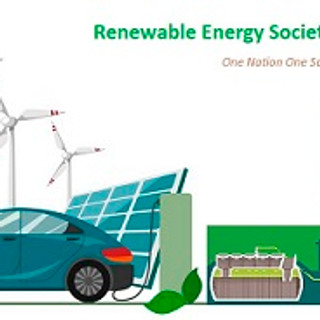
When India pledged at COP26 to achieve 500 GW of non‑fossil capacity by 2030, skeptics wondered whether the ambition could match reality. Fast forward to 2025, and the numbers tell a powerful story. $11.8 billion in clean energy investments in just the first half of this year, and a renewable capacity base that has more than tripled since 2014. India has made remarkable strides in scaling up renewable energy capacity—from 76.37 GW in March 2014 to 242.63 GW by August 2025—positioning itself among the top global markets.
In March 2014, India’s renewable energy stood at 76 GW. By August 2025, it had surged to 242.63 GW, representing more than half of the nation’s total installed capacity. Solar power leads the charge with 123 GW, followed by wind at 52 GW, while bioenergy, small hydro, and large hydro round out the mix. Nuclear adds another 8.78 GW, bringing total non‑fossil capacity to 251 GW.
This growth is not just about megawatts. It is about India’s transformation from an energy‑deficit nation to a global clean energy leader, now ranked 3rd in solar, 4th in wind, and 4th in overall renewable capacity worldwide.
As of Q2 2025, around 40% of India’s renewable energy pipeline is already under implementation, while an additional 10–12% is in the tendering stage, creating a robust pipeline of projects. Within this, solar accounts for the largest share—well over half of the total pipeline—followed by wind and hybrid/round-the-clock (RTC) projects, which together make up most of the remainder.
Notably, close to 60% of the under-implementation projects have already secured Power Purchase Agreements (PPAs), reflecting strong market uptake and investor confidence. However, over one-third of the pipeline remains without signed PPAs, highlighting offtake and contractual risks that could delay commissioning.
Beyond variable renewables, large hydro contributes nearly one-fifth of the overall non-fossil pipeline, while nuclear projects under development represent a smaller but strategically important share. Together, these additions will further diversify India’s low-carbon energy mix, strengthening reliability and balancing intermittent solar and wind generation.
Renewable generation surged from 190.96 billion units (BU) in FY 2014–15 to 403.64 BU in FY 2024–25, raising the renewables share of total generation from 17.2% to 22.06%. Notably, the share jumped to 27.02% by July 2025, driven by optimal wind and solar resource conditions. As grid integration deepens, future analysis should examine hourly and seasonal generation variability, storage utilization rates, and dispatch patterns.
Financing and Investment Trends
Budgetary allocations for MNRE rose from ₹10,222 crore in 2023–24 to ₹26,549.38 crore in 2025–26, with actual spend at 82.56% and 81.24% of RE in FY 2023–24 and FY 2024–25, respectively. Private investment mirrored this momentum: clean energy sector deals totaled $11.8 billion in H1 2025, the second highest half-year on record, driven by large solar and green open access deals—despite domestic content constraints under ALMM/DCR norms.
Independent data indicate module prices rose 15% in Q2 2025 to ₹17.72/Wp, reflecting supply tightness, while Green Day-Ahead Market (GDAM) volumes on IEX jumped 52.9% year-on-year to 815 MU, demonstrating growing merchant market liquidity.
India’s renewable energy transition is anchored in a comprehensive policy architecture that combines long‑term capacity planning, demand‑side obligations, financial incentives, and institutional reforms. At the heart of this framework lies the annual bidding trajectory of 50 GW, managed by Renewable Energy Implementing Agencies (REIAs) such as SECI, NTPC, NHPC, and SJVN. This predictable pipeline has provided much‑needed visibility to developers and investors, ensuring competitive price discovery and a steady flow of new projects.
Yet, beneath this robust framework lies a structural challenge: a significant portion of capacity in the pipeline remains stranded. While a large share of projects have secured Power Purchase Agreements (PPAs), many are yet to be commissioned due to delays in approvals, transmission readiness, or financing bottlenecks. Equally concerning is the sizeable tranche of projects without signed PPAs, which exposes developers to offtake risk and undermines the bankability of investments. The recent discontinuation of certain waivers—such as those on inter‑state transmission charges—has further complicated the commissioning of already‑awarded projects, eroding the financial assumptions under which bids were placed.
This dual pain point—signed but uncommissioned capacity, and tendered capacity without PPAs—creates a drag on India’s otherwise impressive growth trajectory. Unless addressed through timely interventions on grid readiness, regulatory certainty, and offtake assurance, the gap between “capacity awarded” and “capacity delivered” could widen, slowing progress toward the 2030 target.
On the demand side, the government has strengthened compliance mechanisms through Renewable Purchase Obligations (RPOs) and Renewable Consumption Obligations (RCOs). By embedding penalties of up to ₹10 lakhs and ₹3.72 per unit for non-compliance under the Energy Conservation Act, the framework shifts from voluntary adoption to enforceable mandates, thereby creating assured offtake for renewable power.
Complementing these measures are a suite of flagship schemes that target different segments of the energy ecosystem. PM-KUSUM aims to decentralize solar adoption in agriculture with a 34.8 GW target, while PM-Surya Ghar: Muft Bijli Yojana seeks to democratize rooftop solar by reaching one crore households with 30 GW capacity. The Solar Parks Scheme (40 GW) and Green Energy Corridors address land aggregation and transmission bottlenecks, while Viability Gap Funding (VGF) for offshore wind and the National Bioenergy Programme diversify the renewable portfolio beyond solar and wind. Collectively, these schemes balance utility-scale expansion with distributed generation and emerging technologies.
On the supply side, the government has prioritized domestic manufacturing to reduce import dependence and strengthen energy security. The Production Linked Incentive (PLI) Scheme for high-efficiency solar PV modules, covering 48 GW of integrated capacity across Tranches I and II, is the cornerstone of this effort. This is reinforced by Domestic Content Requirement (DCR) mandates, Basic Customs Duty (BCD) on imported modules and cells, and calibrated duty concessions on capital goods for domestic manufacturing. Together, these measures are reshaping India into a global hub for clean energy manufacturing.
The Union Budget further reinforced this policy ecosystem by allocating ₹200 billion for Small Modular Reactor (SMR) R&D, incentivizing clean technology manufacturing, and linking state borrowing headroom to DISCOM reforms. This last measure is particularly significant, as it ties fiscal flexibility to power sector performance, nudging states toward financial discipline and grid modernization.
Taken together, these initiatives reflect a multi-pronged strategy: ensuring supply through predictable auctions, mandating demand through enforceable obligations, enabling infrastructure through transmission and land support, and securing long-term competitiveness through domestic manufacturing. The coherence of this policy mix is what has allowed India to attract record investments in 2025 and sustain its trajectory toward the 500 GW non-fossil target by 2030.
A key milestone was the achievement of over 217 GW of non‑fossil capacity by January 2025, reflecting strong momentum in solar and wind additions. Solar alone contributed nearly two‑thirds of the new capacity, driven by the rapid uptake of rooftop systems under the PM‑Surya Ghar: Muft Bijli Yojana and large‑scale projects in Rajasthan, Gujarat, and Tamil Nadu. Wind additions, though smaller in scale, reinforced India’s position as the world’s fourth‑largest wind market.
On the financial front, the sector attracted record investment flows of $11.8 billion in the first half of 2025, underscoring investor confidence in India’s clean energy market. Beyond greenfield projects, a significant portion of this capital was directed toward mergers and acquisitions in hybrid and storage ventures, signaling a shift toward integrated business models that combine generation with firming capacity.
The market landscape also evolved with the operationalization of green hydrogen incentives under the SIGHT programme. Contracts were awarded for electrolyser manufacturing capacity of 3 GW per year, alongside green ammonia supply agreements totaling over 700,000 tonnes annually at globally competitive tariffs. These developments mark the beginning of India’s transition from being a renewable power hub to an emerging green fuels economy.
Internationally, India advanced its leadership role through the One Sun One World One Grid (OSOWOG) initiative under the International Solar Alliance. The feasibility study for trans‑regional solar grid interconnections progressed, laying the groundwork for cross‑border power trade and positioning India as a central node in future global clean energy networks.
Domestically, the National Smart Grid Mission accelerated modernization efforts. Key initiatives included the rollout of advanced metering infrastructure, pilot projects on vehicle‑to‑grid (V2G) integration, and enhanced forecasting tools for variable renewables. These measures are critical for ensuring grid stability as renewable penetration deepens, while also preparing the system for the electrification of transport and distributed energy resources.
Taken together, these developments highlight a sector that is not only expanding in scale but also diversifying in scope—from power generation to green fuels, from domestic capacity to international collaboration, and from traditional grid operations to digitalized, consumer‑centric models. They reinforce India’s trajectory toward becoming not just a renewable energy leader, but a global clean energy innovator.
Conclusion
Over the past decade, India’s renewable energy sector has expanded by more than 218%, growing from under 80 GW in 2014 to over 240 GW by August 2025. Renewables now account for over half of the nation’s total installed capacity, compared to less than one‑third a decade ago. Solar alone has multiplied more than six times, while wind has grown by nearly 70%, underscoring the sector’s rapid diversification.
Looking ahead, India must sustain an annual growth rate of around 10–12% in renewable capacity to achieve the 500 GW non‑fossil target by 2030. This will require not only scaling up solar and wind but also ensuring that energy storage deployment rises from negligible levels today to at least 15–20% of variable renewable capacity by 2030, enabling round‑the‑clock reliability. Similarly, grid modernization, cost transparency, and stronger socio‑environmental safeguards will be essential to maintain investor confidence and public support.
Beyond 2030, the pathway to net‑zero by 2070 demands a broader transformation. Renewables will need to supply over 70% of electricity demand by mid‑century, supported by large‑scale electrification of transport, industry, and agriculture. Green hydrogen, offshore wind, and advanced nuclear will play complementary roles, while carbon capture and negative‑emission technologies will be required to balance hard‑to‑abate sectors.
By addressing current gaps—such as storage integration, curtailment management, and ESG reporting—India can convert its impressive capacity growth into a resilient, inclusive, and globally benchmarked clean energy system. The progress so far demonstrates that India is not only on track to meet its 2030 commitments but is also laying the groundwork for a sustainable net‑zero future by 2070, setting an example for emerging economies worldwide.
*****
India Renewable Energy Transition , 500 GW Target 2030, Net Zero India 2070,
Solar & Wind Power Growth, Green Hydrogen & Ammonia Economy, Energy Storage & Smart Grids, Clean Energy Investments 2025, PLI Solar Manufacturing India, Sustainable Energy & ESG Impact, Global Clean Energy Leadership
RESI also acknowledges the contributions of researchers, analysts, and practitioners who continue to provide insights, data, and constructive feedback, ensuring that the renewable energy transition remains inclusive, sustainable, and globally benchmarked. This publication is dedicated to all those working tirelessly to power India’s future with clean, affordable, and resilient energy.
#According to BloombergNEF’s Renewable Energy Investment Tracker (H1 2025), India attracted $11.8 billion in renewable energy investments, with solar accounting for 77% of the inflows (Economic Times EnergyWorld, Aug 22, 2025).


Comments